How to Renovate My Patio Decoradhouse: Modern Outdoor Ideas
James Anderson
Editorial Contributor
Learning how to renovate my patio decoradhouse is not simply about buying new cushions or adding decorative plants. A successful patio renovation combines appearance, comfort, drainage, durability, circulation, lighting, and the way your household actually uses the outdoor space. Whether the patio is small and compact or large enough for dining and entertaining, thoughtful planning can produce a better result than an expensive collection of disconnected upgrades.
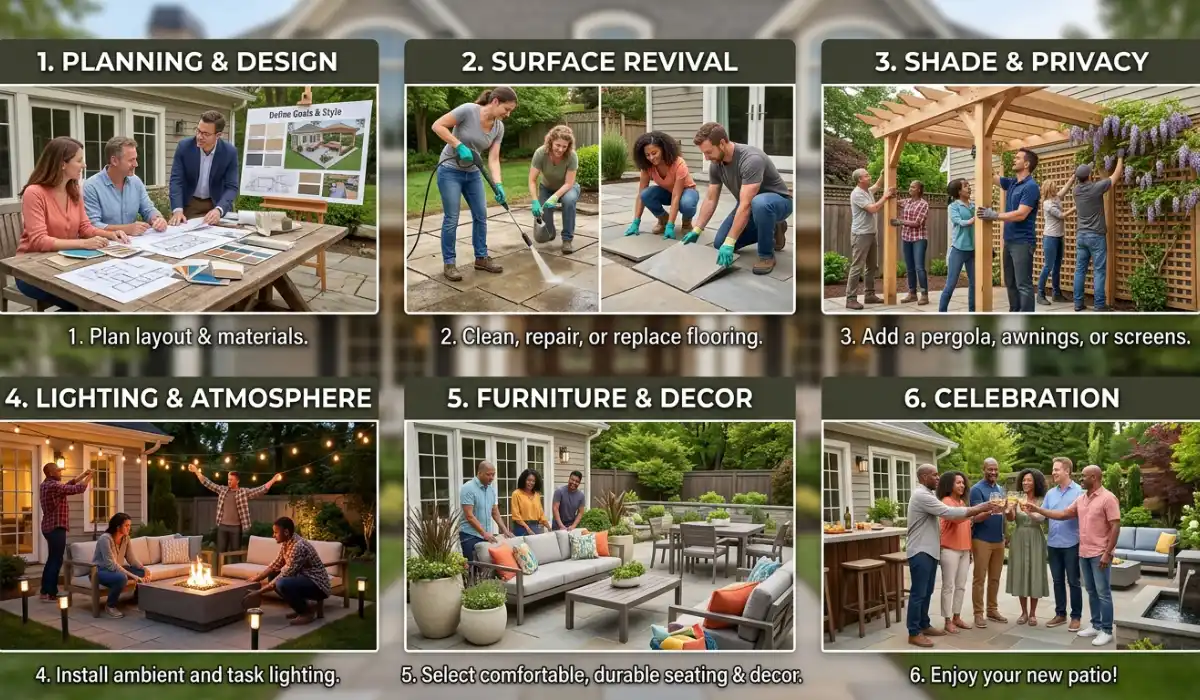
The most effective approach is to renovate in stages. First inspect the existing structure and solve practical problems, then establish the layout, choose durable materials, and finally add furniture, plants, lighting, shade, and personality. This prevents decorative improvements from hiding problems that should have been addressed first.
Start by Understanding What Your Patio Actually Needs
Before searching for furniture or patio décor, evaluate the condition of the entire space. Look at the floor, walls, steps, drainage points, doors, electrical fixtures, furniture, planting areas, and surfaces that receive direct weather exposure.
Spend time on the patio at different times of day. A space that feels comfortable in the morning may become extremely hot in the afternoon, while a beautifully positioned seating area may be poorly lit after sunset.
Check the Patio for Practical Problems First
Look for standing water after rain, loose pavers, cracked concrete, slippery surfaces, deteriorating grout, damaged railings, unstable furniture, and blocked drainage channels. These issues should take priority over decorative changes.
Also consider how water moves away from the house. Poor drainage can damage flooring, furniture, plants, and even nearby building elements, so a renovation should improve water management rather than simply covering the symptoms.
Measure Before Buying Anything
Accurate measurements make patio renovation considerably easier. Record the overall length and width, door locations, steps, existing structures, drainage areas, and the approximate dimensions of furniture you intend to keep.
Leave enough clearance for people to walk comfortably between doors, seating, dining areas, and other frequently used locations. A beautiful patio can quickly become frustrating when furniture blocks circulation.
Decide How You Want to Use the Patio
The best answer to how to renovate my patio decoradhouse begins with function. Your patio should be designed around the activities you actually perform rather than a generic outdoor trend.
If the patio is mainly used for morning coffee, comfortable chairs and a small table may be more valuable than a large dining set. If you frequently entertain guests, prioritize conversation seating, dining space, lighting, shade, and convenient serving areas.
Build the Layout Around Your Daily Routine
Think about where people enter the patio, where food comes from, where guests sit, and which areas receive the most sun or wind. This information can determine the best location for furniture before you spend money on new pieces.
A practical layout usually feels open rather than crowded. Keep major pathways clear and avoid placing large furniture directly in front of doors or important access points.
Create Functional Patio Zones Without Making the Space Feel Crowded
Dividing a patio into zones is one of the strongest ways to make a large outdoor area feel organized. Instead of treating the entire patio as one empty surface, give different sections specific purposes.
A seating zone can contain a sofa and coffee table, while another area can accommodate dining. A small corner might become a plant display, reading area, or quiet retreat.
Use Visual Boundaries Instead of Permanent Walls
Outdoor rugs, planters, changes in furniture direction, lighting, and different surface textures can define zones without construction. This approach is particularly useful when you want flexibility.
For example, placing a rug beneath the front legs of lounge furniture visually establishes a conversation area without reducing the openness of the patio.
Renovate the Patio Flooring Before Adding Decorative Features
Flooring has a major effect on both appearance and usability. Before replacing it, determine whether the existing surface is structurally sound enough to restore.
Deep cleaning, stain removal, crack repair, suitable exterior coatings, or resealing can sometimes transform an older patio without a complete replacement. However, widespread cracking, severe settlement, persistent water problems, or damaged materials may justify a larger renovation.
Choose Flooring Based on Performance, Not Appearance Alone
Possible patio surfaces include concrete, brick, pavers, natural stone, porcelain outdoor tile, and other exterior-rated materials. The right choice depends on climate, drainage, maintenance requirements, slip resistance, installation conditions, and budget.
Do not choose a surface simply because it looks attractive in a photograph. Outdoor flooring must tolerate moisture, temperature changes, sunlight, dirt, and repeated foot traffic.
Select Outdoor Furniture That Fits the Space and Weather
Furniture is one of the most visible parts of a patio renovation, but bigger does not automatically mean better. A large sectional can overwhelm a compact patio, while several small pieces may look lost in a very large area.
When considering how to renovate my patio decoradhouse, measure furniture before purchasing it and map the pieces onto your patio dimensions. This simple step can prevent expensive returns and awkward layouts.
Choose Materials That Match Your Exposure
Outdoor furniture may face intense sunlight, rain, humidity, dust, and temperature fluctuations. Materials such as aluminum, treated wood, teak, powder-coated metal, and suitable synthetic materials can perform well when properly selected and maintained.
Pay attention to cushions and upholstery as well. Outdoor-rated fabrics are generally more appropriate for furniture exposed to moisture and sunlight than ordinary indoor textiles.
Give Old Patio Furniture a Second Life
Replacing everything is rarely necessary. Strong existing furniture can often be cleaned, repaired, refinished, repainted, or paired with new cushions.
Wooden furniture may benefit from appropriate exterior refinishing, while some metal pieces can be refreshed after proper surface preparation. Reusing quality furniture can reduce renovation costs and preserve pieces that already fit the patio well.
Add an Outdoor Rug to Establish the Main Seating Area
An outdoor rug can make a patio feel more connected and finished without requiring construction. It helps anchor furniture visually and introduces texture or color to an otherwise hard landscape.
Choose a rug designed for outdoor exposure and select a size that works with the furniture arrangement. Avoid using too many competing patterns when the patio already contains colorful cushions, plants, flooring, or decorative features.
Use a Controlled Color Palette for a More Cohesive Design
A patio does not need numerous colors to look interesting. Start with two or three foundational tones drawn from the house, flooring, landscaping, or surrounding environment.
Natural wood, stone, cream, gray, charcoal, muted green, terracotta, and soft blue can provide a flexible foundation. Accent colors can then be introduced through cushions, planters, rugs, umbrellas, and accessories.
Connect the Patio to the Interior of Your Home
One useful answer to how to renovate my patio decoradhouse is to treat the patio as an extension of the home's interior rather than an unrelated outdoor area.
Repeat selected colors, textures, or materials from the adjoining room. If the interior uses warm wood and neutral upholstery, for example, similar tones can create a smoother transition toward the patio.
Improve Patio Lighting in Layers
Good outdoor lighting should do more than make the patio visible. It should provide safe illumination while creating atmosphere after dark.
Use brighter practical lighting near steps, entrances, cooking areas, and pathways. Softer illumination can then be added around seating, plants, walls, or architectural features.
Combine Functional and Decorative Lighting
Wall fixtures, lanterns, string lights, recessed fixtures, pathway lights, and suitable solar lighting can serve different purposes. Avoid relying on one extremely bright fixture because it can create harsh shadows and make the space feel less relaxing.
If the renovation requires new electrical wiring, permanent fixtures, or significant electrical modifications, use appropriately qualified help rather than treating the work as a simple decorating project.
Add Shade Where the Patio Gets Too Much Sun
A patio that becomes uncomfortably hot may remain unused even if the design looks excellent. Shade should therefore be considered a comfort feature rather than merely a decorative addition.
Depending on the space, options include umbrellas, shade sails, retractable awnings, pergolas, covered structures, or carefully positioned vegetation. The best choice depends on the size, orientation, climate, and permanence you want.
Think About Sun Direction Before Installing Shade
Observe where sunlight falls during the hours when you normally use the patio. A shade solution that works at midday may provide little protection during early morning or late afternoon.
This observation can help you position seating more intelligently and avoid spending money on a structure that does not solve the actual comfort problem.
Use Plants to Add Privacy, Texture, and Natural Character
Plants are among the most effective ways to soften a patio dominated by concrete, stone, brick, or other hard surfaces. They can introduce color, texture, shade, and privacy while visually connecting the patio with the rest of the garden.
Instead of placing identical pots in a straight line, vary the height and form. Large containers can anchor corners, medium plants can frame seating, and smaller plants can occupy tables or shelves.
Choose Plants According to Their Growing Conditions
Plant selection should reflect sunlight, watering requirements, temperature, wind exposure, available soil, and the level of maintenance you can realistically provide.
A plant that looks perfect at a garden center may struggle if placed in the wrong light or exposed to conditions it cannot tolerate. Match the plant to the patio rather than forcing the patio to accommodate an unsuitable plant.
Create Privacy Without Completely Enclosing the Patio
Privacy can dramatically improve how comfortable an outdoor space feels. However, a full wall is not always necessary.
Tall planters, trellises, climbing plants, outdoor curtains, slatted screens, shrubs, and strategically positioned containers can interrupt direct sightlines while keeping the patio visually open.
Identify the Actual Privacy Problem
Before installing a screen, determine where unwanted views come from. You may only need to block one neighboring window or one direct sightline.
Solving the specific visibility problem can cost less and preserve more natural light than enclosing the entire patio.
Make Room for Outdoor Dining and Serving
If outdoor meals are important, create a dedicated dining area rather than squeezing a table into whatever space remains after the lounge furniture is positioned.
On smaller patios, round tables can provide efficient circulation. Larger patios may support rectangular or extendable tables, especially when the dining area is positioned close to the house for easier food service.
Add a Simple Serving Station
You do not necessarily need a complete outdoor kitchen. A weather-resistant cart, cabinet, shelf, or small counter can hold plates, drinks, utensils, and serving equipment.
For larger permanent installations involving plumbing, gas, electrical connections, drainage, or built-in cooking equipment, detailed planning and professional installation may be necessary.
Consider a Fire Feature Carefully
A fire pit or outdoor fireplace can make a patio more useful during cool evenings and provide a natural focal point for conversation.
However, fire features require careful attention to clearance, ventilation, surrounding materials, local requirements, and manufacturer instructions. Never sacrifice safe access or appropriate separation simply to achieve a particular visual arrangement.
Plan Your Patio Renovation Around a Realistic Budget
A patio renovation can range from a simple weekend refresh to a major construction project. The key is deciding which improvements provide the greatest benefit before spending money.
| Budget Level | High-Value Improvements |
| Low | Cleaning, furniture rearrangement, plants, cushions, small décor |
| Moderate | Outdoor rug, lighting, refreshed furniture, planters, shade |
| Larger | Flooring, built-in seating, privacy structures, landscaping |
| Major | Pergola, outdoor kitchen, structural work, drainage, permanent features |
The smartest answer to how to renovate my patio decoradhouse is not necessarily to spend the most. It is to direct money toward improvements that solve genuine problems and increase everyday use.
Follow the Renovation in the Right Order
A practical sequence is:
- Inspect the patio and identify structural or drainage problems.
- Clean the entire area and remove unnecessary clutter.
- Repair damaged surfaces and safety issues.
- Decide the furniture and activity zones.
- Address shade and privacy.
- Install or improve lighting.
- Add furniture and outdoor textiles.
- Introduce plants and finishing décor.
This order reduces the chance of damaging new decorative elements while completing more disruptive work later.
How to Renovate My Patio Decoradhouse on a Small Patio
Small patios benefit from careful editing. Every item should have a purpose, and oversized furniture should be avoided unless it is genuinely necessary.
A compact sofa, two chairs, a foldable table, vertical planters, wall-mounted lighting, and storage furniture with more than one function can make a small patio considerably more practical.
Keep the Center of the Patio Open
One common small-space mistake is placing furniture everywhere available. Instead, preserve a clear route through the patio and push larger elements toward the edges when possible.
Vertical space can also become useful. Trellises, hanging planters, wall-mounted shelves, and appropriately positioned lighting can add interest without consuming valuable floor area.
How to Renovate My Patio Decoradhouse for a Large Outdoor Space
Large patios need structure because too much empty space can make furniture arrangements look disconnected. Divide the area into two or more functional zones while maintaining a consistent design language.
For example, one section could contain lounge seating, another could hold an outdoor dining table, and a quieter corner could contain plants and a comfortable reading chair.
Repeat Materials Across Different Zones
Use repeated colors, furniture materials, planter styles, or lighting types to connect separate areas. Repetition creates visual continuity without requiring every piece to match.
This is particularly helpful when a large patio includes multiple functions. The zones remain distinct while still feeling like parts of one outdoor room.
Make the Patio More Comfortable Through Small Design Decisions
Comfort is influenced by more than the furniture itself. Seat placement, shade, wind exposure, lighting, surface temperature, privacy, and the distance between activity zones all affect how enjoyable the patio becomes.
When deciding how to renovate my patio decoradhouse, think about what makes you leave the patio early or avoid using it. If the problem is heat, prioritize shade. If it feels exposed, address privacy. If it becomes difficult to navigate after furniture is added, redesign the circulation.
Avoid These Common Patio Renovation Mistakes
A renovation can become expensive when planning is skipped. Some of the most avoidable mistakes involve buying furniture before measuring, ignoring drainage, choosing unsuitable outdoor materials, and adding too many decorative items.
Other problems include insufficient lighting, poor furniture circulation, inadequate shade, and selecting plants without considering their growing conditions.
Do Not Hide Problems Under New Décor
Fresh cushions and attractive planters cannot solve a patio that has serious drainage, structural, or surface problems. Cosmetic improvements should come after practical concerns have been identified and addressed.
Likewise, do not choose a material solely because it looks impressive. Outdoor performance, maintenance, safety, and installation requirements should influence every major material decision.
Decide Which Projects You Can DIY
Many cosmetic improvements can be handled as DIY projects if you have the necessary skills and appropriate tools. Cleaning, decluttering, furniture arrangement, container planting, and some suitable refinishing work are examples.
More complex work deserves greater caution. Structural changes, major drainage work, permanent roofing, electrical modifications, gas connections, plumbing, and substantial masonry can require specialist knowledge and may be subject to local requirements.
Build a Patio Maintenance Plan Before You Finish
A renovation is more successful when the finished space remains manageable. Consider how frequently furniture needs cleaning, whether cushions need seasonal storage, how plants will be watered, and how easily leaves and debris can be removed.
Choose materials and furniture according to the amount of maintenance you are willing to perform. A slightly less delicate finish that remains attractive with minimal upkeep may be a better long-term choice than a high-maintenance surface.
Think About Seasonal Storage
If your climate includes harsh weather, plan where cushions, lightweight furniture, umbrellas, and decorative accessories will go when they are not being used.
Storage benches, weather-resistant cabinets, covered areas, and compact storage containers can protect valuable items and reduce the amount of time required to prepare the patio for changing seasons.
A Simple Patio Renovation Checklist
Before considering the project complete, review the space from both a design and practical perspective.
- Is the flooring safe and suitable for outdoor exposure?
- Does water drain away properly?
- Can people move easily between doors and seating?
- Is there enough shade during the hours you use the patio?
- Does the lighting cover important pathways and activity areas?
- Are furniture materials appropriate for the weather?
- Do plants receive suitable light and water?
- Is privacy sufficient?
- Is there enough storage for outdoor accessories?
- Can you maintain the finished patio without excessive effort?
This final review helps ensure the renovation improves the entire outdoor experience rather than only its appearance.
How to Renovate My Patio Decoradhouse for Long-Term Value
The most valuable patio improvements are usually the ones that increase comfort, usability, durability, and visual cohesion. A patio that looks beautiful but has poor drainage or uncomfortable seating will not deliver the same benefit as a simpler space that people actually use.
Think beyond short-lived trends. Durable flooring, functional lighting, appropriate shade, comfortable seating, efficient circulation, healthy plants, and sensible storage can remain useful for years.
Frequently Asked Questions About How to Renovate My Patio Decoradhouse
What should I renovate first on a patio?
Start with inspection, drainage, structural concerns, flooring condition, and safety. Once these practical issues are addressed, move on to layout, furniture, shade, lighting, plants, and decorative details.
How can I renovate a patio without spending a lot of money?
Start with cleaning, rearranging existing furniture, repairing usable items, adding plants, replacing worn cushions, and improving lighting. Small improvements can have a substantial effect when they address the patio's biggest functional weaknesses.
What makes a patio look professionally designed?
A clear layout, consistent color palette, properly scaled furniture, layered lighting, appropriate plants, and defined activity zones can create a more intentional appearance. Professional-looking patios do not necessarily require expensive furniture.
How do I make a small patio feel bigger?
Keep pathways open, avoid oversized furniture, use multifunctional pieces, introduce vertical planting, and limit decorative clutter. A restrained layout usually makes a compact outdoor space feel more spacious.
Is patio flooring worth replacing?
Replacement can be worthwhile when the existing surface has serious damage, persistent drainage problems, or poor performance. If the structure is sound, cleaning, repairing, refinishing, or resealing may provide a more economical solution.
What type of furniture is best for an outdoor patio?
The best furniture is appropriately sized, comfortable, durable, and suited to the local exposure conditions. Material selection should account for sunlight, moisture, temperature changes, maintenance, and how frequently the furniture will be used.
How can I add privacy to my patio?
Use planters, tall shrubs, trellises, climbing plants, outdoor curtains, or screens to interrupt unwanted sightlines. Focus on the specific direction of exposure instead of automatically enclosing the entire patio.
How can I make my patio more comfortable in hot weather?
Shade is usually the starting point. Umbrellas, awnings, pergolas, shade sails, trees, and strategic furniture placement can reduce direct sun exposure and make seating more usable during hotter periods.
Conclusion
Knowing how to renovate my patio decoradhouse is ultimately about creating an outdoor space that works as well as it looks. Start by examining drainage, flooring, safety, circulation, weather exposure, and the way you use the patio, then build the design around those realities instead of decorating first.
From there, introduce appropriately sized furniture, durable materials, layered lighting, shade, plants, privacy features, and carefully selected accessories. You do not need to complete every improvement at once. A staged renovation allows you to spend intelligently, solve the most important problems first, and gradually create a patio that is comfortable, practical, attractive, and genuinely worth using.
James Anderson
Passionate about transforming houses into inspired homes. Writing about practical DIY guides, interior design, and outdoor living.