The Home Cover: A Practical Guide to Home Coverage Explained
James Anderson
Editorial Contributor

A home is more than walls, floors, and a roof. It is a long-term investment that requires maintenance, informed decisions, and protection against problems that can affect its condition and value. The home cover is a useful concept for understanding the different areas of information, protection, maintenance, and practical guidance that homeowners need.
For homeowners, understanding home coverage is particularly important because a property can face many different risks. Roof damage, plumbing failures, electrical problems, weather-related issues, structural concerns, and everyday wear can all affect a house differently.
This guide explains what the home cover means, what home coverage can include, how homeowners should think about protection, and why maintenance should remain part of a complete home strategy.
What Is The Home Cover?
The term the home cover can be understood as a broad approach to protecting and caring for a residential property. Depending on context, “home cover” may refer to insurance protection, property maintenance, or a wider source of information about keeping a home safe and functional.
These areas should not be confused.
Home insurance generally deals with specified financial risks and policy conditions. Home maintenance involves preventing deterioration through regular inspection and repairs. Home improvement focuses on upgrading a property's appearance, performance, comfort, or value.
A useful homeowner strategy considers all three.
For example, an insurance policy may provide financial protection after a covered incident, but it does not replace routine maintenance. If a homeowner notices deteriorating roof flashing and ignores it for years, the resulting problem may be treated differently from sudden damage caused by an unexpected event.
That distinction makes understanding the home cover particularly valuable.
What Does Home Coverage Usually Include?
Home coverage does not mean that every possible problem with a property is automatically protected. The exact scope depends on the type of coverage, contract terms, exclusions, limits, and circumstances.
However, homeowners commonly think about several major areas.
Building and Structural Protection
The physical structure is one of the most important parts of a property.
Depending on the policy, building-related protection can concern components such as:
- Roofs
- Exterior walls
- Floors
- Ceilings
- Permanent fixtures
- Doors and windows
- Built-in kitchens and bathrooms
- Garages and other permanent structures
The precise definition varies between providers and policies, so homeowners should always examine the wording rather than relying on a general description of home insurance.
Contents and Personal Belongings
A house contains considerably more than its permanent structure.
Furniture, appliances, electronics, clothing, tools, and other possessions may require contents protection where appropriate. Contents coverage is generally considered separately from protection for the building itself.
This distinction matters because damage to a building and damage to belongings can involve different limits, conditions, and exclusions.
Liability Considerations
Homeownership can also create liability risks.
For instance, someone could potentially be injured on a property or damage could unintentionally affect another property. Some home insurance arrangements include liability protection, although the exact circumstances covered depend on the policy.
Homeowners should therefore review liability provisions rather than assuming they are automatically included.
Home Cover Is Not the Same as Home Maintenance
One of the most important points for homeowners is that protection and maintenance serve different purposes.
Insurance is generally designed to respond to defined risks under an agreed policy. Maintenance is the ongoing process of keeping the property in reasonable condition.
Consider a leaking roof.
If a storm suddenly damages a properly maintained roof, the situation may be very different from a roof that has gradually deteriorated because damaged tiles were ignored for years.
Regular maintenance can therefore reduce the likelihood of expensive problems while also helping homeowners identify issues early.
Why Preventive Maintenance Matters
Small defects can develop into major repairs when they remain unnoticed.
A simple inspection might identify:
- Missing or damaged roof tiles
- Blocked gutters
- Damp patches
- Cracked sealant
- Failing exterior paint
- Corroded pipework
- Loose electrical fittings
- Damaged window seals
The objective is not to repair everything immediately. Instead, homeowners should identify issues, assess their severity, and determine which problems require professional attention.
How Should Homeowners Assess Their Coverage?
Choosing suitable home protection starts with understanding the property itself.
A homeowner should consider the building's age, construction, location, replacement requirements, valuable possessions, and potential environmental risks.
Start With the Property
Create a basic inventory of the home.
Record important information about:
- The property's approximate age
- Construction materials
- Roof type
- Heating system
- Plumbing system
- Electrical installation
- Outbuildings
- High-value possessions
- Recent improvements
Photographs and receipts can also be useful for documenting possessions and improvements.
Review Coverage Limits
A policy can appear comprehensive while still having limits that are unsuitable for a particular property.
Pay attention to the difference between the property's market value and the estimated cost of rebuilding it. These are not necessarily the same figure.
Rebuilding costs can involve demolition, labour, materials, professional services, and regulatory requirements. Homeowners should therefore use appropriate valuation information when determining the level of building protection required.
Understand Exclusions
Exclusions deserve as much attention as the benefits.
Common exclusions or limitations may relate to issues such as gradual deterioration, poor maintenance, certain types of flooding, unoccupied properties, wear and tear, or specific high-risk circumstances.
The wording varies considerably, so homeowners should read the actual policy documentation.
The Role of Home Improvement in Property Protection
Home improvement can contribute to a property's long-term performance, but not every upgrade provides the same benefit.
Some improvements primarily affect appearance, while others improve energy efficiency, durability, safety, or usability.
Examples include:
- Improving roof insulation
- Replacing damaged windows
- Upgrading inefficient heating equipment
- Improving ventilation
- Repairing drainage
- Updating electrical components
- Improving bathroom waterproofing
- Sealing air leaks
Before starting major work, homeowners should understand the existing condition of the property and determine whether specialist advice is necessary.
Improvements Can Change Insurance Requirements
Major alterations can affect how a property is valued and how it should be insured.
A loft conversion, extension, renovated kitchen, new outbuilding, or substantial structural alteration may change the property's characteristics.
It is therefore sensible to notify an insurer when policy terms require it and keep documentation for significant improvements.
A Practical Home Coverage Checklist
A simple checklist can help homeowners identify gaps in their approach.
| AreaWhat to Review | |
| Building | Structure, roof, walls, permanent fixtures |
| Contents | Furniture, electronics, appliances and valuables |
| Maintenance | Roof, gutters, plumbing, heating and electrical systems |
| Documentation | Policy documents, receipts, photographs and warranties |
| Improvements | Extensions, conversions and major renovations |
| Risks | Weather, water, fire, theft and location-specific hazards |
This does not replace professional insurance or property advice, but it gives homeowners a practical starting point.
Common Mistakes Homeowners Make
Understanding the home cover also means understanding what can go wrong when property protection is treated too casually.
Assuming Every Problem Is Covered
A home insurance policy is not a general repair contract. Different events and circumstances are treated differently.
Always check the policy wording before assuming that a particular repair will be covered.
Underestimating Rebuilding Costs
The amount needed to purchase a similar property on the market may differ from the cost of rebuilding the existing structure.
Using the wrong figure can create an inappropriate level of building coverage.
Ignoring Routine Maintenance
Insurance should not be considered a substitute for property care.
Blocked gutters, deteriorating sealant, minor leaks, and damaged roofing materials can become considerably more expensive if they are ignored.
Failing to Document Improvements
Keep invoices, photographs, guarantees, certificates, and other relevant records after major work.
Good documentation makes it easier to demonstrate what has been installed or improved and can help with future maintenance.
Automatically Renewing Without Reviewing the Policy
A homeowner's circumstances can change.
A renovation, new high-value possession, change in occupancy, or change in the property's use may make an annual review worthwhile.
How The Home Cover Fits Into a Wider Home Strategy
A strong approach to homeownership is not based on one product or one annual task.
It combines financial protection with practical property management.
Think of the process as three connected layers:
Protection: Appropriate insurance and risk management.
Maintenance: Regular inspections, servicing, cleaning, and timely repairs.
Improvement: Upgrades that improve safety, efficiency, comfort, durability, or usability.
When these areas work together, homeowners are better positioned to manage unexpected problems and make informed decisions about their property.
This is where the home cover becomes more than a phrase. It represents a broader homeowner mindset: understand the property, identify its risks, maintain its important systems, and make decisions based on reliable information.
What Information Should Homeowners Keep?
Good records are often overlooked, but they can become extremely useful over the life of a property.
A homeowner can maintain a digital folder containing:
- Insurance policies
- Renewal documents
- Receipts for major purchases
- Building work invoices
- Planning or building-control documentation where applicable
- Appliance warranties
- Contractor information
- Photographs of important areas
- Inspection reports
- Maintenance dates
For expensive or technically significant work, keeping professional certificates and manufacturer documentation is particularly useful.
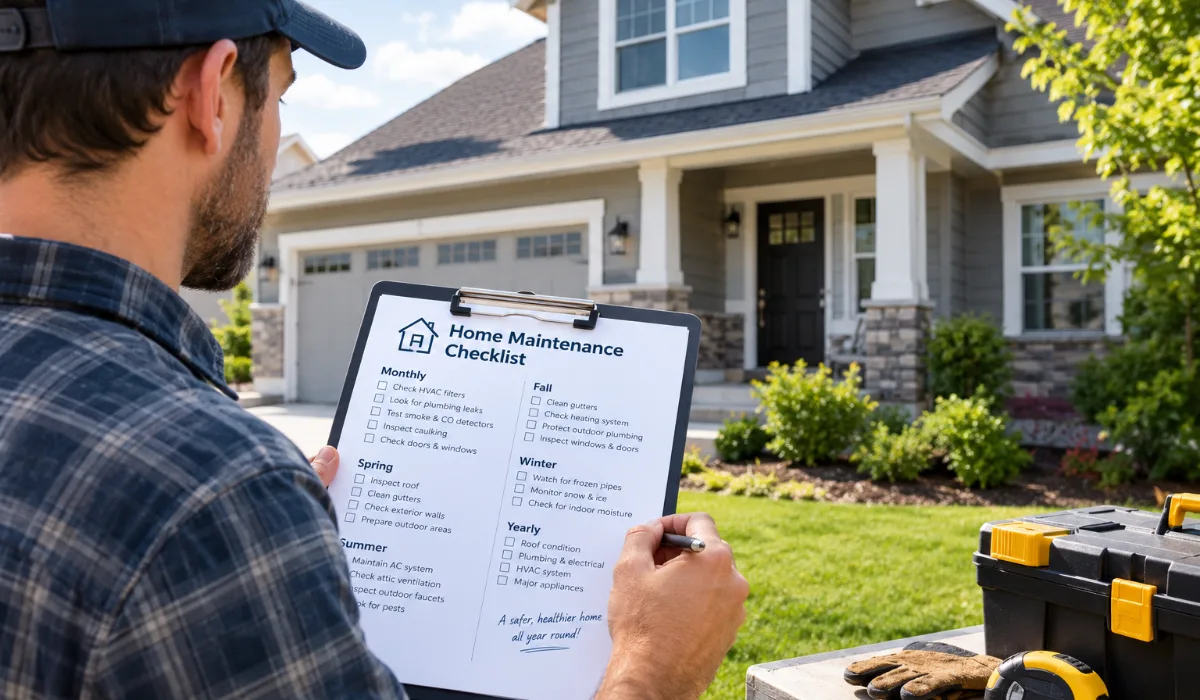
Create a Maintenance Schedule
A property should not be inspected only when something goes wrong.
A basic schedule might include regular checks of the roof, gutters, plumbing, heating, ventilation, exterior finishes, windows, and drainage. The appropriate frequency depends on the property's age, construction, location, and systems.
Professional inspections should be arranged when a problem goes beyond normal DIY maintenance or involves potentially dangerous systems.
Frequently Asked Questions
What does the home cover mean?
The home cover can refer broadly to the protection, maintenance, and information associated with looking after a residential property. In an insurance context, “home cover” can refer to financial protection provided under specific policy terms.
Is home cover the same as home insurance?
Not necessarily. Home insurance is a specific financial product. Home cover can be used more broadly when discussing protection for a property, while the exact meaning depends on the context.
Does home insurance cover maintenance?
Generally, routine maintenance and gradual deterioration are not the same as sudden insured events. The exact treatment depends on the policy, so homeowners should check their individual terms.
Why is property maintenance important?
Regular maintenance helps identify defects before they become larger problems. It can also protect the property's condition, improve efficiency, and extend the service life of building components and equipment.
Should homeowners review their coverage after renovations?
Yes. Significant renovations or structural changes can alter the characteristics or value of a property. Homeowners should check whether their insurer needs to be informed and whether existing limits remain appropriate.
What is the difference between building and contents coverage?
Building coverage generally concerns the physical property and permanent fixtures, while contents coverage generally concerns personal belongings kept within the home. Exact definitions vary by policy.
How often should home coverage be reviewed?
There is no universal interval suitable for every homeowner, but reviewing protection when circumstances change—and at renewal—is sensible. Major renovations, valuable purchases, changes in occupancy, or changes to the property can all justify a review.
Conclusion
A well-protected home requires more than an insurance policy. Homeowners need to understand the property itself, maintain essential systems, document improvements, and regularly evaluate whether their protection remains suitable.
The home cover can therefore be viewed as part of a wider approach to responsible homeownership. By combining appropriate coverage with preventive maintenance and informed home improvement decisions, homeowners can reduce avoidable risks and manage unexpected problems more effectively.
Whether you are maintaining an older house, improving a recently purchased property, or planning a major renovation, the most valuable approach is the same: understand what you own, know where its vulnerabilities are, maintain it properly, and make protection decisions based on the actual needs of the property.
James Anderson
Passionate about transforming houses into inspired homes. Writing about practical DIY guides, interior design, and outdoor living.