Home Maintenance Checklist: A Month-by-Month Guide for U.S. Homeowners
James Anderson
Editorial Contributor
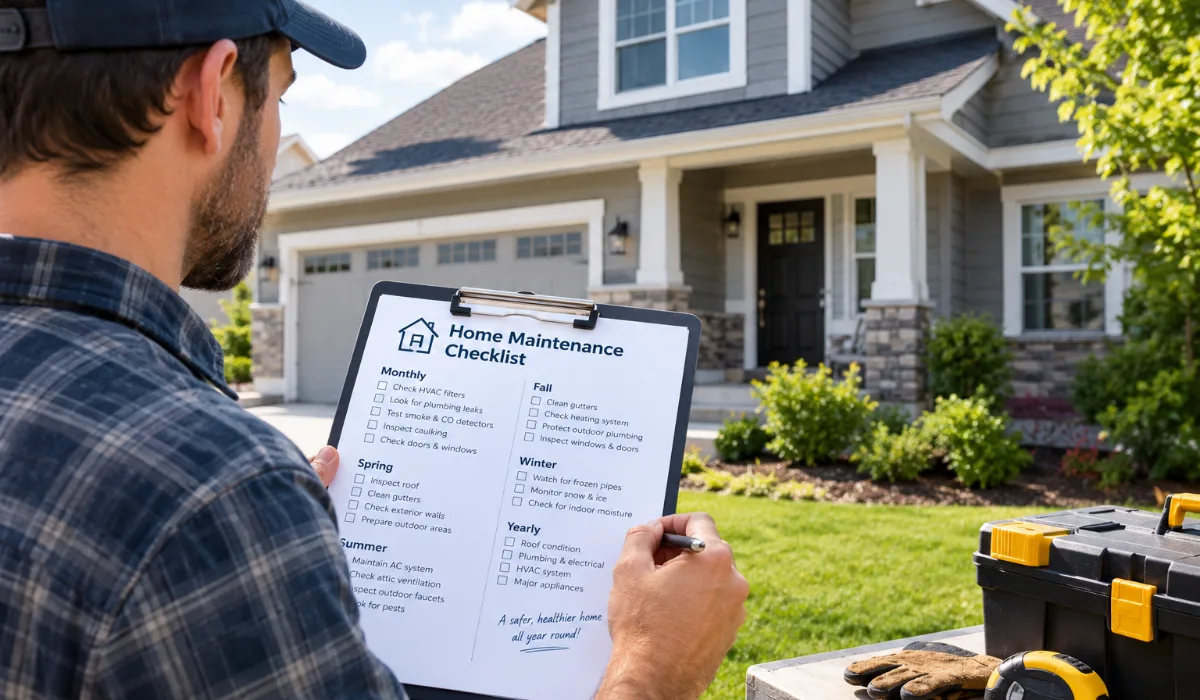
Owning a home comes with more than mortgage payments and decorating decisions. Regular maintenance can help you spot small problems before they become expensive repairs.
A practical home maintenance checklist makes it easier to keep track of routine jobs around your house, from changing HVAC filters to checking for leaks and preparing your property for changing weather.
The right schedule will vary depending on your home's age, location, climate, and equipment. Use this guide as a practical starting point, and follow the maintenance instructions provided by your appliance and equipment manufacturers.
Why a Home Maintenance Checklist Matters
Many home problems begin with something small: a slow plumbing leak, a clogged gutter, a dirty HVAC filter, or a damaged roof shingle.
Regular inspections can help you notice these issues earlier.
A maintenance routine can help you:
- Identify minor problems before they become larger repairs
- Keep heating and cooling equipment operating efficiently
- Reduce the chance of water damage
- Protect important parts of your home
- Keep outdoor areas in better condition
- Plan maintenance expenses instead of dealing with unexpected problems
You do not need to inspect every part of your home every week. The goal is to create a manageable routine.
Monthly Home Maintenance Checklist
Some tasks are useful to check approximately once a month.
1. Check HVAC Filters
Look at your heating and cooling system's filter. Replace or clean it according to the manufacturer's recommendations and the type of filter you use.
Homes with pets, allergies, or higher dust levels may require more frequent attention.
2. Look for Plumbing Leaks
Check underneath sinks and around toilets, washing machines, water heaters, and exposed pipes.
Look for:
- Damp areas
- Water stains
- Dripping connections
- Musty odors
- Unexplained moisture
A small leak can eventually cause significant water damage.
3. Check Your Smoke and Carbon Monoxide Detectors
Test smoke alarms and carbon monoxide detectors according to the manufacturer's instructions.
Replace batteries when required, and replace the entire device when it reaches the end of its recommended service life.
4. Inspect Caulking Around Wet Areas
Check bathrooms, kitchens, tubs, showers, and sinks for deteriorating caulk.
Damaged or missing sealant can allow moisture to reach areas that are difficult to dry.
5. Check Doors and Windows
Look for damaged weatherstripping, gaps, sticking windows, or damaged screens.
Small gaps can affect comfort and allow moisture or pests to enter.
Spring Home Maintenance Checklist
Spring is a useful time to inspect your property after winter weather.
Inspect the Roof
From the ground, look for visibly damaged or missing shingles, damaged flashing, or areas that appear unusual.
If you notice a potential problem, consider having the roof inspected by a qualified professional rather than climbing onto the roof yourself.
Clean and Inspect Gutters
Remove leaves and debris from gutters and make sure downspouts direct water away from the home's foundation.
Poor drainage can contribute to water problems around the property.
Check Exterior Walls
Walk around the exterior and look for cracks, peeling paint, damaged siding, or areas where water appears to be entering.
Pay particular attention to places around windows and doors.
Prepare Outdoor Areas
Inspect decks, patios, fences, and steps for loose boards, damaged surfaces, or other safety issues.
Trim vegetation that is touching the house where appropriate.
Summer Home Maintenance Checklist
Summer maintenance often focuses on cooling systems, outdoor areas, and moisture.
Maintain Your Air Conditioning System
Keep outdoor HVAC equipment clear of leaves, grass, and other debris.
Follow the manufacturer's maintenance recommendations and arrange professional service when required.
Check Attic Ventilation
Proper attic ventilation can be important for managing heat and moisture.
Look for signs of moisture, mold, or inadequate airflow. If you're unsure what you're seeing, a qualified professional can evaluate the space.
Inspect Outdoor Faucets
Turn on exterior faucets and check for leaks.
If you notice water around the connection or a damaged hose bib, have it repaired before it becomes a larger plumbing problem.
Look for Pest Problems
Inspect the exterior for signs of termites, carpenter ants, rodents, or other pests.
Early identification can make pest problems easier to address.
Fall Home Maintenance Checklist
Fall is an ideal time to prepare your home for colder weather.
Clean Gutters Again
Leaves can quickly accumulate in gutters during fall.
Make sure gutters and downspouts remain clear so rainwater can flow away from the home.
Check Heating Equipment
Before temperatures drop, make sure your heating system is ready for the season.
If your system requires professional inspection or servicing, schedule it before you need it regularly.
Protect Outdoor Plumbing
In areas that experience freezing temperatures, follow appropriate winterization procedures for exterior plumbing.
The exact steps depend on your home's plumbing system and local climate.
Inspect Windows and Doors
Check weatherstripping and visible gaps around windows and doors.
Repairing damaged seals can improve comfort during colder weather.
Winter Home Maintenance Checklist
Winter maintenance depends heavily on where you live. Homes in northern states may need significantly different preparation than homes in warmer regions.
Watch for Frozen Pipes
During freezing weather, pay attention to exposed plumbing and vulnerable areas.
If a pipe freezes, avoid using unsafe methods such as an open flame to thaw it. A qualified plumber can help if you're unsure how to handle the situation.
Monitor Ice and Snow
Heavy snow and ice can create risks for roofs, walkways, trees, and gutters.
Follow local safety guidance and use professional help for hazardous conditions.
Check for Indoor Moisture
Cold weather can contribute to condensation around windows and other areas.
Persistent moisture should be investigated because it can contribute to mold and material damage.
Home Maintenance Tasks to Do Once or Twice a Year
Not everything needs monthly attention.
Depending on your home and equipment, consider periodically reviewing:
- Roof condition
- Attic and crawl spaces
- Plumbing connections
- Water heater
- HVAC equipment
- Electrical panels and visible wiring
- Foundation and exterior drainage
- Chimney and fireplace
- Garage door components
- Major appliances
Always follow the maintenance schedules provided by manufacturers and hire qualified professionals for work that requires specialized knowledge or creates safety risks.
A Simple Home Maintenance Schedule
You don't need to remember everything at once.
A simple schedule could look like this:
| FrequencyExamples | |
| Monthly | Filters, leaks, alarms, visible moisture |
| Spring | Roof, gutters, exterior, outdoor areas |
| Summer | AC, pests, outdoor plumbing |
| Fall | Heating system, gutters, weatherstripping |
| Winter | Frozen-pipe risks, moisture, snow and ice |
| Annually | Major systems and professional inspections |
The exact schedule should be adjusted for your home's age, location, climate, materials, and equipment.
When Should You Call a Professional?
DIY maintenance can be useful for simple tasks, but some problems should be handled by qualified professionals.
Consider professional help when dealing with:
- Electrical problems
- Gas appliances or gas lines
- Major plumbing leaks
- Roof repairs
- Structural concerns
- HVAC repairs
- Significant water damage
- Potential mold problems
- Pest infestations
- Chimney or fireplace issues
If you are unsure whether a repair is safe to perform yourself, getting professional advice is usually the better option.
Final Home Maintenance Checklist
A home maintenance routine does not have to be complicated. Start with the systems that can cause significant damage when neglected: water, heating and cooling, roofing, drainage, electrical systems, and safety equipment.
Use a monthly reminder for small checks and organize larger jobs around the seasons.
Most importantly, keep records of repairs, inspections, appliance servicing, and replacements. A simple maintenance history can help you understand your home's needs over time and plan future work more effectively.
Regular maintenance cannot prevent every home problem, but it can make it easier to identify issues early and keep your property in better condition throughout the year.
James Anderson
Passionate about transforming houses into inspired homes. Writing about practical DIY guides, interior design, and outdoor living.