Tips Decoradyard: Smart Ideas for a Better Outdoor Space
James Anderson
Editorial Contributor
A successful outdoor space is not created by filling a yard with attractive furniture, plants, and decorative accessories. The most effective tips Decoradyard begin with understanding how the space will be used, how much sunlight it receives, how water moves through it, and which features deserve the most attention. A well-planned backyard should look attractive while remaining comfortable, durable, accessible, and easy to maintain.
Whether you have a compact patio, a suburban backyard, or a large garden, the same principle applies: design the space around real activities rather than decoration alone. With the right sequence, even small improvements can make an outdoor area feel more organized and significantly more usable.
What Do Tips Decoradyard Really Mean?
Tips Decoradyard refers to practical methods for designing and decorating outdoor areas by combining landscaping, furniture, lighting, planting, hardscape materials, and decorative details. The objective is not simply to make a yard look attractive but to make every part of it serve a useful purpose.
A strong outdoor design balances three elements:
- Function: how people move, relax, dine, garden, or entertain
- Performance: drainage, sunlight, weather exposure, durability, and maintenance
- Appearance: color, texture, proportion, planting, lighting, and accessories
Start With a Site Assessment Before Buying Anything
One of the most overlooked tips Decoradyard is to study the yard before purchasing materials or furniture. Walk through the property at different times of day and note where sunlight, shade, wind, and standing water occur.
Check Sunlight, Shade, Wind, and Drainage
Observe which areas receive full sun, partial shade, or very little direct light. This information determines where seating, shade structures, containers, and different plant varieties should be positioned.
Drainage deserves equal attention. If water regularly collects in one area after rainfall, placing furniture or installing expensive paving there without correcting the underlying problem can create long-term damage.
Study the View From Inside the House
Your yard is not experienced only when you are standing outdoors. Windows and doors provide important viewing points throughout the day.
Stand inside the kitchen, living room, or bedroom and look outside. A tree, planter group, sculpture, or seating arrangement placed within an important sightline can make the outdoor area feel more connected to the home.
Divide the Yard Into Functional Zones
Instead of treating the backyard as one large open area, divide it according to activities. This is one of the most useful tips Decoradyard because zoning creates structure without necessarily requiring expensive construction.
Create a Seating and Conversation Zone
A seating area should have enough space for people to move around chairs and tables without constantly stepping onto planting beds. Position seating where shade, privacy, and views are reasonably balanced.
An outdoor rug can visually define the zone, while a coffee table provides a practical center. For small spaces, a compact bistro set may be more appropriate than a large sectional.
Plan a Dining and Cooking Zone
If you regularly eat outdoors, keep the dining area reasonably close to the kitchen or outdoor cooking equipment. Reducing the distance between food preparation and seating makes the space more convenient.
Leave sufficient clearance around tables, grills, and chairs. A beautiful dining setup becomes frustrating when people cannot pull out chairs or walk behind seated guests.
Reserve a Flexible Zone
Not every part of the yard needs a permanent purpose. An open section can accommodate children, gardening projects, exercise, seasonal furniture, or occasional gatherings.
Keeping some flexible space prevents the design from becoming overcrowded. It also makes the backyard easier to adapt as household needs change.
Choose Plants According to Conditions, Not Appearance Alone
Plant selection is one of the areas where decorative planning frequently goes wrong. A plant may look perfect in a photograph but struggle in your particular soil, climate, sunlight, or moisture conditions.
Match Plants to Sunlight and Soil
Before selecting plants, determine whether the intended location is sunny, shaded, dry, damp, exposed, or protected. Consider soil drainage and the mature size of each plant rather than judging it only by its current nursery-container size.
Native and climate-adapted plants can often reduce maintenance because they are better suited to local growing conditions. This does not mean every garden must use only native species; it means plant selection should begin with environmental compatibility.
Design for Mature Plant Size
A common mistake is planting too closely because the garden looks empty immediately after installation. As shrubs and perennials mature, overcrowding can restrict airflow and create unnecessary pruning work.
Read the expected mature height and width before planting. Leave adequate space between specimens and consider how their root systems and canopies will interact over time.
Use Hardscape to Give the Garden Structure
Plants provide softness and seasonal variation, but hardscape elements create the framework of an outdoor environment. Paths, patios, edging, retaining structures, steps, and paving can determine how people move through the yard.
Make Pathways Practical
A pathway should connect meaningful destinations rather than exist simply as decoration. The route from the house to a seating area, garden gate, storage area, or outdoor kitchen should be intuitive.
Choose surfaces according to expected use. Smooth, stable paving may be better for frequently used routes, while gravel can work well in appropriate garden settings when properly contained and maintained.
Add Edging for Cleaner Garden Beds
Garden edging separates planting areas from lawns, paths, and hardscape. It can reduce soil and mulch migration while giving beds a defined appearance.
Stone, metal, brick, timber, and other materials can work depending on the design. The most important factor is consistency: random edging materials can make an otherwise attractive garden appear unfinished.
Select Outdoor Furniture for the Climate and Space
Furniture should be evaluated for more than style. Outdoor pieces are exposed to ultraviolet radiation, moisture, temperature changes, dust, and wind.
Prioritize Material Performance
Common outdoor furniture materials include powder-coated metal, treated timber, synthetic wicker, aluminum, and weather-resistant plastics. Each has different maintenance requirements and durability characteristics.
Check whether cushions are designed for outdoor exposure and whether covers are available. In wet climates, drainage and drying become especially important because trapped moisture can encourage mildew and accelerate material deterioration.
Match Furniture Scale to the Yard
Oversized furniture can make a small patio feel cramped, while undersized furniture can disappear in a large garden. Measure the available area before purchasing.
Leave enough circulation space around tables and seating. Design should account for how people enter, sit, stand, and move rather than simply how the furniture looks in a product photograph.
Layer Outdoor Lighting Instead of Using One Bright Source
Lighting can change the atmosphere of a yard after sunset, but outdoor illumination should be planned in layers rather than relying on a single powerful fixture.
Combine Ambient, Task, and Accent Lighting
Ambient lighting provides general visibility. Task lighting is useful around cooking, dining, stairs, entrances, and other areas requiring clearer visibility.
Accent lighting highlights trees, architectural features, planting beds, walls, or focal points. Combining these layers produces more depth than illuminating the entire yard equally.
Use Warm Light for Relaxed Areas
Warm-toned lighting generally creates a softer atmosphere for patios, seating areas, and dining spaces. Pathways and steps require enough illumination for safe movement, but excessive brightness can create glare.
Avoid pointing bright fixtures directly toward seating or neighboring properties. Concealed or shielded fixtures often produce a more comfortable result.
Make Small Outdoor Spaces Feel Larger
Small yards do not need to imitate large landscapes. They need better proportion, circulation, and visual organization.
Use Vertical Elements
Trellises, climbing plants, narrow planters, privacy screens, and wall-mounted features draw the eye upward and make use of limited floor space.
Vertical gardening can also separate functional zones without consuming as much area as a traditional hedge or large planting bed.
Keep the Color Palette Controlled
Using too many unrelated colors can make a compact yard feel visually crowded. Choose a restrained base palette and introduce stronger colors through plants, cushions, containers, or seasonal accessories.
This does not mean the space must be monochromatic. Repetition of two or three complementary tones is usually enough to create visual continuity.
Apply the Rule of Scale, Repetition, and Contrast
Some of the most effective tips Decoradyard are design principles rather than individual products. Scale determines whether an element feels appropriate for the space, repetition creates consistency, and contrast prevents the design from becoming monotonous.
For example, repeating the same material in a pathway and raised planter can visually connect separate areas. Contrasting soft planting with hard stone surfaces can then create enough variation to keep the landscape interesting.
Repeat Materials Strategically
If a patio uses natural stone, consider repeating a related stone texture in garden edging or a low wall. Similarly, metal planters can visually connect with metal lighting fixtures or furniture frames.
Repetition should be noticeable but not excessive. The purpose is to establish relationships between different parts of the yard.
Create One or Two Focal Points
A focal point gives the eye somewhere to settle. It might be a mature tree, water feature, sculpture, fire feature, architectural wall, or particularly attractive planting composition.
Avoid creating several competing focal points in a small area. Too many attention-grabbing elements can make the design feel fragmented.
Decorate Vertically for Privacy and Visual Depth
Privacy does not always require a tall solid fence. Layered planting, trellises, screens, pergolas, and carefully positioned trees can create separation while maintaining airflow and visual interest.
A vertical structure can also support climbing plants and create a stronger sense of enclosure around a seating area. This approach is especially useful where neighboring buildings are visible above conventional fencing.
Make the Yard More Sustainable and Easier to Maintain
A beautiful outdoor space becomes less attractive when it requires constant work. Sustainable design can reduce water use, maintenance time, and unnecessary replacement of materials.
Choose Water-Efficient Planting
Group plants according to similar water requirements rather than giving every plant the same irrigation schedule. Drought-tolerant species can be useful in appropriate climates, particularly in exposed areas.
Mulching can help reduce evaporation and suppress weeds, although mulch depth and material should be appropriate for the plantings. Avoid piling mulch directly against tree trunks or plant stems.
Consider Efficient Irrigation
Drip irrigation can deliver water closer to plant root zones than broad overhead watering in many landscape applications. Timers and moisture-aware irrigation practices can further reduce waste.
However, irrigation should be designed around actual plant requirements rather than simply running on a fixed schedule regardless of rainfall and seasonal conditions.
Use Decor Strategically Rather Than Filling Every Empty Space
Decorative accessories can finish a garden, but excessive decoration creates visual clutter and increases maintenance.
Useful additions may include:
- Outdoor cushions
- Weather-resistant rugs
- Lanterns
- Sculptural planters
- Decorative screens
- Garden art
- Bird-friendly features
- Small water features
Choose pieces that support the existing design rather than adding unrelated objects simply because an area looks empty.
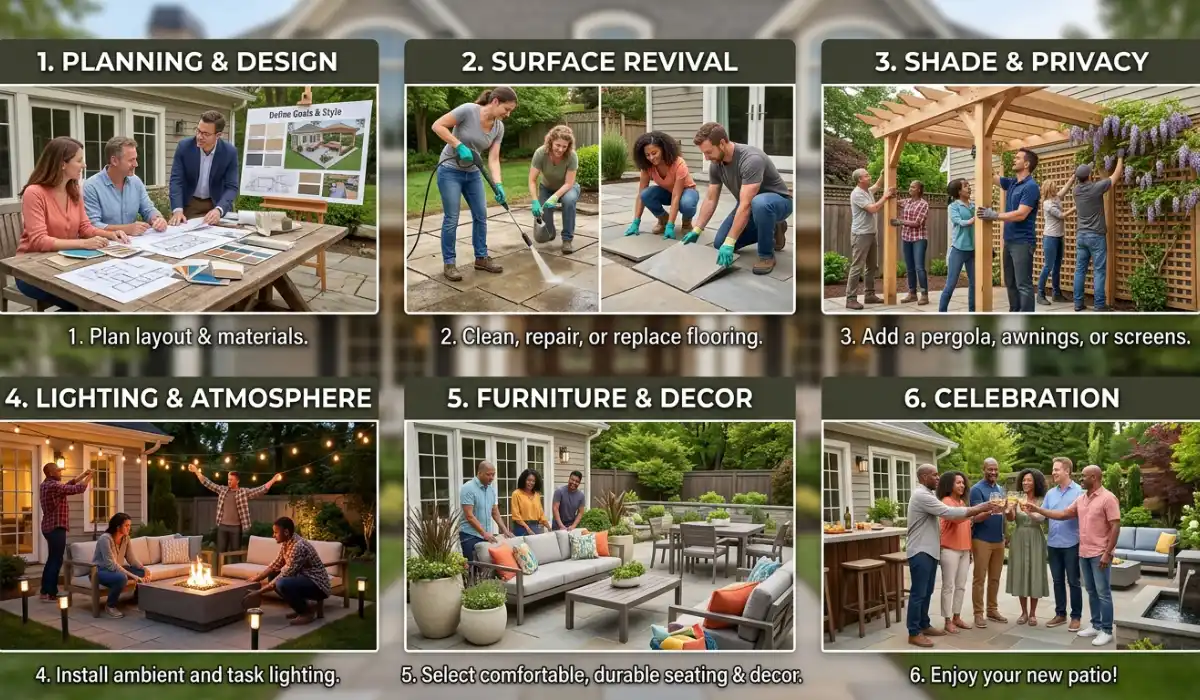
Budget Your Backyard in the Right Order
A major weakness in many outdoor makeover plans is spending the budget on visible accessories before solving structural issues. A more reliable sequence is to address drainage, safety, circulation, and essential infrastructure first.
| Priority | Project | Why It Comes First |
| 1 | Drainage and grading | Prevents recurring water problems |
| 2 | Paths and basic hardscape | Establishes circulation and usable areas |
| 3 | Shade and privacy | Improves comfort and usability |
| 4 | Planting | Adds structure, color, and environmental value |
| 5 | Furniture | Makes zones functional |
| 6 | Lighting | Extends evening use |
| 7 | Decorative accessories | Adds finishing character |
This order prevents expensive decorative purchases from being damaged or made obsolete by later construction work.
Pros and Cons of a Phased Outdoor Makeover
| Advantages | Potential Drawbacks |
| Spreads costs over time | The complete design takes longer |
| Allows you to test layouts | Temporary arrangements may need moving |
| Reduces unnecessary purchases | Material prices may change |
| Makes maintenance easier to manage | Some projects may need coordination |
| Lets you adapt to changing needs | The yard may look unfinished between phases |
A phased approach is particularly useful when the entire backyard cannot be renovated at once. Complete the infrastructure first, then gradually add planting, furniture, lighting, and decorative features.
Seasonal Updates That Do Not Require a Full Redesign
You do not need to rebuild the yard every season. Small changes can refresh the appearance while keeping the underlying layout intact.
Spring and Summer
Focus on healthy planting, comfortable seating, shade, outdoor dining, and evening lighting. Refresh cushions or containers where necessary rather than replacing functional furniture.
Autumn and Winter
Remove or protect vulnerable accessories, prune plants according to their species and local growing conditions, and inspect drainage before heavy rainfall. Weather-resistant lighting and durable structural elements can keep the yard useful even when temperatures drop.
Common Outdoor Decorating Mistakes to Avoid
Understanding what not to do can save more money than purchasing another decorative feature. Several recurring mistakes reduce both appearance and functionality.
Buying Furniture Before Measuring
Furniture that looks suitable online may overwhelm the actual space. Measure the area, doorways, and circulation routes before ordering.
Ignoring Maintenance Requirements
A design that depends on delicate plants, untreated materials, or complicated cleaning routines may become difficult to maintain. Evaluate the amount of time you realistically want to spend caring for the space.
Overcrowding the Yard
Every empty area does not need a plant, chair, ornament, or table. Negative space allows important features to stand out and provides room for movement.
Copying Trends Without Considering the Property
A popular design trend may not suit your climate, architecture, soil, or lifestyle. Use trends as inspiration, not as a substitute for site-specific planning.
A Practical 30-Day Decoradyard Improvement Plan
If the entire project feels overwhelming, divide the work into manageable stages.
Week 1: Measure the yard, identify sunlight and drainage patterns, remove unnecessary clutter, and determine the primary activities the space needs to support.
Week 2: Establish functional zones, plan pathways, select priority planting areas, and decide where shade and privacy improvements are necessary.
Week 3: Install or improve the highest-priority structural elements. Add appropriate plants, basic furniture, and essential lighting once the layout is stable.
Week 4: Add textiles, containers, artwork, accessories, and other finishing details. Walk through the completed areas and remove anything that feels unnecessary or obstructs movement.
Frequently Asked Questions
What are the most important tips Decoradyard for beginners?
Start by defining how you want to use the yard rather than buying decorations. Assess sunlight, drainage, wind, available space, and circulation before selecting plants, furniture, or hardscape materials.
How can I improve my backyard without spending a lot?
Prioritize changes that have a visible functional effect, such as decluttering, rearranging existing furniture, improving planting beds, adding simple lighting, or defining a seating zone. Reusing suitable materials can also reduce the cost of smaller decorative projects.
What plants are best for an outdoor decorating project?
There is no universally best plant. Select species according to your local climate, soil, sunlight, moisture conditions, mature size, and maintenance requirements.
How do I make a small backyard look more spacious?
Keep circulation clear, use appropriately scaled furniture, introduce vertical planting, and avoid excessive decorative objects. A limited and consistent material palette can also make the space feel more cohesive.
Should landscaping or furniture come first?
Major landscaping, grading, drainage, and hardscape decisions should generally come before final furniture placement. Furniture should be selected after the dimensions and function of the primary outdoor zones are established.
Is outdoor lighting worth adding?
Yes, when it serves a clear purpose. Path lighting can improve navigation, task lighting supports activities, and accent lighting can emphasize important landscape features without illuminating every part of the yard equally.
How often should an outdoor space be redesigned?
A complete redesign is rarely necessary. Regular maintenance combined with occasional changes to textiles, containers, planting, lighting, or furniture can keep a well-planned outdoor space current for many years.
Conclusion
The most useful tips Decoradyard are not about adding the largest number of decorations; they are about making deliberate decisions in the correct order. Start by understanding the site, define functional zones, solve drainage and circulation issues, select plants according to real growing conditions, and choose furniture and materials that can withstand the environment.
Once the practical foundation is established, lighting, color, texture, containers, outdoor textiles, and decorative accents can give the yard personality. The result should be more than an attractive photograph it should be an outdoor space that works comfortably for everyday life, remains manageable to maintain, and continues to perform as the garden matures.
James Anderson
Passionate about transforming houses into inspired homes. Writing about practical DIY guides, interior design, and outdoor living.