Decoradyard Tips for a Stylish and Functional Home
James Anderson
Editorial Contributor
Creating a beautiful home does not always require expensive furniture or a complete renovation. The most effective Decoradyard tips begin with understanding how a space is used, how furniture relates to its dimensions, and how lighting, colors, textures, and materials work together.
A successful decorating plan should make everyday life easier as well as make the home attractive. These Decoradyard tips focus on practical decisions that can improve living rooms, bedrooms, kitchens, patios, balconies, gardens, and other residential spaces without unnecessary clutter or spending.
What Are Decoradyard Tips and Why Do They Matter for Modern Homes?
Decoradyard tips can be understood as a practical approach to residential decoration that connects visual design with everyday functionality. Instead of treating decoration as simply adding accessories, the approach considers layout, proportion, comfort, storage, lighting, materials, personality, and indoor-outdoor connections.
This way of decorating is particularly useful for modern homes because available space often needs to perform several functions. A living room may also be a workspace, a small bedroom may require additional storage, and an outdoor area may need to function as both a relaxing space and an entertaining zone.
Decoration Should Solve Problems, Not Create Them
One of the most useful Decoradyard tips is to ask what a room actually needs before buying anything. If a hallway feels cramped, another decorative object will not solve the problem; better circulation and storage might.
Likewise, a dark room may benefit more from layered lighting or a carefully positioned mirror than from another wall decoration. Every addition should ideally improve appearance, function, comfort, or organization.
How Decoradyard Tips Start With Measuring and Understanding Your Space
Before choosing furniture, paint, rugs, or decorative accessories, understand the physical characteristics of the room. Measure wall lengths, ceiling height, doors, windows, radiators, outlets, built-in storage, and other permanent features.
These Decoradyard tips can prevent one of the most common decorating mistakes: purchasing something attractive that does not fit properly. Measurements should also account for the route through which furniture will enter the home, especially when buying large sofas, beds, cabinets, or dining tables.
Create a Simple Furniture Map Before Shopping
A basic floor plan can reveal problems before they become expensive. Draw the room approximately to scale and mark the dimensions of your major furniture pieces.
Check:
- Main walking routes
- Door-opening areas
- Window access
- Storage locations
- Seating arrangements
- Lighting positions
- Electrical outlets
The purpose is not to create a professional architectural drawing. It is simply to understand whether your planned arrangement will work in real life.
Leave Practical Circulation Space
Furniture should not make people squeeze between objects every time they cross the room. Clear movement routes are particularly important around entrances, kitchens, stairs, wardrobes, and frequently used seating.
A room can contain beautiful furniture and still feel uncomfortable if circulation has been ignored. Good Decoradyard tips therefore treat empty space as an intentional part of the design.
Decoradyard Tips for Choosing Furniture Based on Proportion Rather Than Matching Sets
Matching furniture sets can be convenient, but a room does not need every piece to come from the same collection. Proportion and visual relationships are usually more important than identical finishes.
For example, a large sectional sofa may need a substantial coffee table and appropriately scaled lighting. A small apartment, on the other hand, can quickly feel crowded when oversized seating is combined with heavy curtains and large decorative pieces.
Use the Largest Pieces as Your Starting Point
Begin with the furniture that occupies the greatest amount of space. Once its position is established, smaller pieces can be arranged around it.
This creates a natural hierarchy and makes it easier to decide where side tables, lamps, rugs, artwork, and accessories belong.
Balance Visual Weight
Furniture with dark finishes or solid shapes can appear visually heavier than pieces with exposed legs or lighter finishes. Balance heavier items with open areas, lighter textures, plants, or appropriately scaled artwork.
The goal is not mathematical symmetry. The objective is a room that feels visually stable from different viewpoints.
Decoradyard Tips for Building a Color Palette That Remains Timeless
Color can transform the character of a room, but using too many unrelated shades can make the design feel fragmented. A controlled palette gives different elements a visual connection.
Among practical Decoradyard tips, one of the simplest is to choose a dominant base color, one or two supporting tones, and a limited accent color. Natural materials such as wood, stone, rattan, or woven fibers can then provide warmth without introducing another artificial color.
| Design Layer | Purpose | Suitable Examples |
| Base | Covers the largest areas | Warm white, beige, soft gray |
| Supporting | Connects furniture and textiles | Taupe, muted green, soft blue |
| Accent | Creates visual interest | Terracotta, ochre, navy |
| Natural | Adds warmth and texture | Wood, stone, rattan |
Use Strong Colors Where Changes Are Easy
If you enjoy experimenting with trends, use stronger colors on cushions, artwork, small furniture, or accessories rather than making every permanent surface highly specific.
This makes future updates easier and reduces the cost of changing the room when your preferences evolve.
Decoradyard Tips for Creating a Layered Lighting Plan
Lighting is frequently treated as a finishing detail, but it should be considered during the planning stage. A room can have attractive furniture and still feel uncomfortable if it has insufficient, excessive, or poorly positioned light.
Effective Decoradyard tips recommend combining ambient, task, and accent lighting according to the activities performed in the space. This creates flexibility instead of forcing one ceiling fixture to handle every situation.
Ambient Lighting for General Visibility
Ambient lighting provides overall illumination. Ceiling fixtures, recessed lights, and appropriately distributed wall lighting can contribute to this layer.
Avoid depending on a single extremely bright source when several softer sources can create more balanced illumination.
Task Lighting for Specific Activities
Task lighting should support activities such as reading, cooking, studying, working, or applying makeup. Desk lamps, under-cabinet lighting, bedside fixtures, and reading lights are examples.
Position the light according to the task rather than simply choosing a decorative fixture that looks attractive.
Accent Lighting for Depth and Character
Accent lighting can highlight artwork, architectural details, plants, shelving, or other focal points. Used carefully, it adds depth and gives the room different moods throughout the day.
Decoradyard Tips for Making Small Rooms Feel More Open
Small rooms do not necessarily need less personality. They need better editing and more deliberate use of space.
One of the most practical Decoradyard tips for compact rooms is to prioritize furniture that performs more than one function. Storage ottomans, narrow consoles, wall-mounted shelves, folding tables, and beds with integrated storage can increase usefulness without consuming unnecessary floor area.
Use Vertical Space Without Overloading the Walls
Walls can provide valuable storage and display space. Tall shelving, vertical artwork, and carefully positioned mirrors can draw the eye upward and make use of otherwise wasted areas.
However, covering every wall with shelves and objects can create visual heaviness. Leave some uninterrupted surfaces so the room retains a sense of openness.
Choose Mirrors With a Purpose
A mirror can increase the perception of depth and reflect natural or artificial light. Its position matters more than its size alone.
Place it where the reflection contributes something attractive or useful. Reflecting a cluttered storage area may make the room feel busier rather than larger.
Decoradyard Tips for Bedroom Decoration That Supports Rest and Comfort
Bedrooms benefit from visual calm because they are primarily spaces for rest and personal routines. Instead of filling every wall and surface with accessories, select a few elements that establish warmth and character.
Useful Decoradyard tips for bedrooms include controlling lighting, keeping bedside necessities accessible, choosing comfortable textiles, and providing sufficient storage for everyday items.
Create a Practical Bedside Arrangement
A bedside table should accommodate the objects you regularly use rather than becoming a collection point for unrelated items. A lamp, book, charging solution, and a small number of personal items may be sufficient.
Where bedside floor or table space is limited, wall-mounted lighting can provide illumination without consuming valuable surface area.
Choose Textures That Add Comfort
Bedding, curtains, rugs, cushions, and upholstered furniture can introduce texture without requiring additional decorative objects. Combining materials such as cotton, wood, woven fibers, and soft upholstery can make a simple room feel more layered.
Keep the number of patterns controlled so the bedroom remains visually restful.
Decoradyard Tips for Living Room Layouts That Support Real Life
The living room often performs several functions at once, making layout especially important. Conversation, television viewing, reading, family activities, and entertaining guests may all happen in the same area.
Rather than arranging every chair toward a television, use Decoradyard tips to create a balanced social arrangement. Furniture should encourage conversation while still providing practical viewing angles where necessary.
Create a Clear Focal Point
A fireplace, artwork, architectural feature, television, or distinctive piece of furniture can serve as the visual anchor. Arrange supporting furniture around it instead of allowing multiple objects to compete for attention.
A clear focal point makes the room easier to organize and gives the eye somewhere to settle.
Keep Technology Visually Controlled
Televisions, speakers, chargers, and cables are part of modern homes, but they do not need to dominate the décor. Cable management, concealed storage, and appropriately positioned equipment can make technology feel integrated.
The goal is not to hide every device. It is to prevent technical equipment from becoming accidental visual clutter.
Decoradyard Tips for Improving Storage Without Sacrificing Style
Good storage can have a major effect on how polished a home looks. Even beautiful decoration becomes difficult to appreciate when everyday objects cover every available surface.
Among the most practical Decoradyard tips is to distinguish between items that need frequent access and things that can be stored away. Frequently used objects should be easy to reach, while less-used belongings can occupy closed cabinets, higher shelves, or dedicated storage areas.
Use Closed and Open Storage Together
Open shelving is useful for books, artwork, plants, and selected decorative objects. Closed storage is better for items that create visual clutter.
A combination of both allows you to display personality while keeping practical belongings organized.
Decoradyard Tips for Connecting Indoor and Outdoor Living Areas
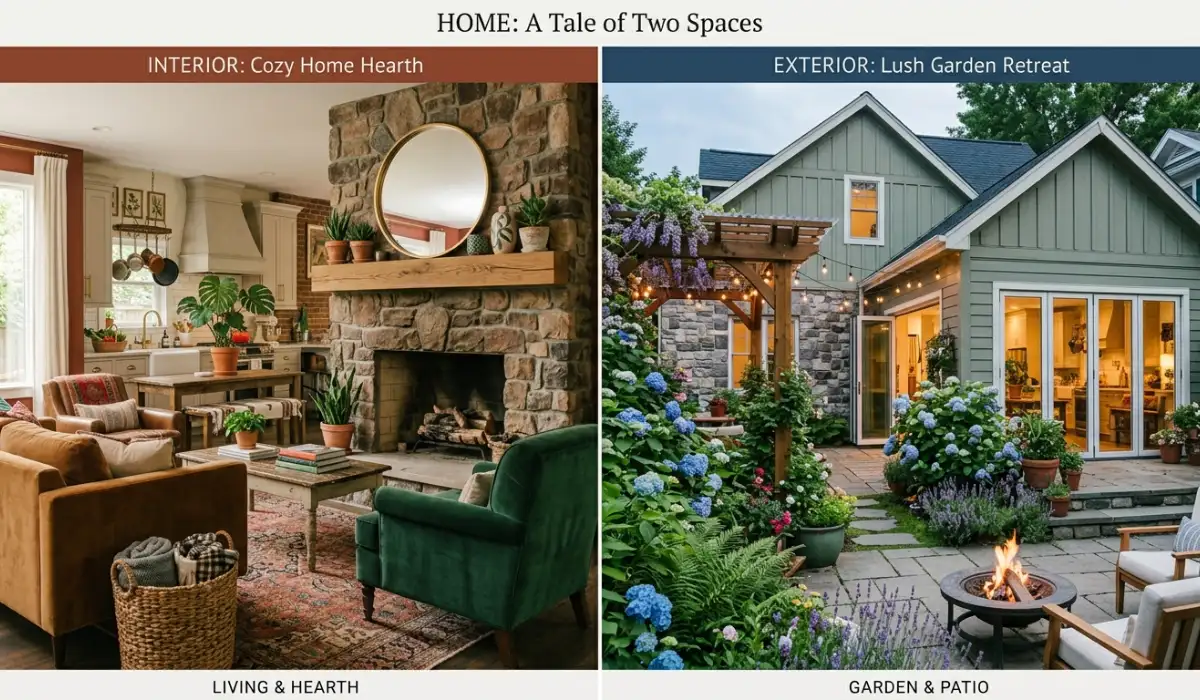
Modern home decoration should not stop at the back door. Patios, balconies, terraces, gardens, and yards can be designed as extensions of interior living spaces.
These Decoradyard tips work particularly well when selected outdoor colors, textures, and materials relate to the interior. For example, an indoor accent color can appear outdoors through cushions or planters without making the two spaces identical.
Choose Outdoor Materials According to Exposure
Outdoor furniture and décor face sunlight, moisture, temperature changes, dirt, and sometimes strong weather conditions. Material selection should therefore consider durability rather than appearance alone.
Weather-resistant furniture, suitable outdoor fabrics, appropriate finishes, and proper drainage can extend the useful life of an outdoor arrangement.
Create Outdoor Zones
A larger yard can be divided into dining, relaxing, gardening, and entertaining areas. Rugs, furniture orientation, planters, lighting, and changes in surface materials can establish these zones without requiring permanent walls.
Decoradyard Tips for Using Plants as Functional Decoration
Plants can add color, texture, height, privacy, and seasonal interest. However, choosing plants only because they look attractive can lead to maintenance problems.
Better Decoradyard tips consider sunlight, watering requirements, soil conditions, mature size, climate, and maintenance before selecting plants. A healthy plant that suits its environment is more valuable than one that struggles because it was chosen solely for appearance.
Create Depth With Different Plant Heights
Combine low plants, medium-height varieties, shrubs, and taller specimens where appropriate. This creates layers and prevents planting arrangements from looking flat.
In compact spaces, vertical planters and climbing plants can provide greenery while preserving floor area.
Think About Mature Plant Size
A plant that looks small at a garden center can eventually become much larger. Check its expected mature height and spread before deciding where to place it.
This reduces future pruning and relocation problems.
Decoradyard Tips for Adding Personality Without Creating Clutter
A home should reflect the people who live there. Artwork, books, photographs, ceramics, plants, handmade objects, and meaningful accessories can make a space feel personal.
However, one of the strongest Decoradyard tips is to display meaningful objects selectively. If every surface is occupied, individual pieces lose their visual importance.
Create Small Decorative Groups
Instead of scattering accessories randomly, arrange a few related objects together. Differences in height, texture, and shape can create interest while maintaining organization.
Leave some empty space around these arrangements so the eye can distinguish individual pieces.
Decoradyard Tips for Budget-Friendly Home Improvements
A decorating project does not have to happen all at once. Start with improvements that produce the greatest practical difference and then add decorative details gradually.
Some Decoradyard tips require little or no spending, such as decluttering, rearranging furniture, improving cable organization, changing the position of lamps, or editing unnecessary accessories.
Prioritize Improvements by Impact
If your budget is limited, address functional problems first. Better storage, comfortable seating, appropriate lighting, and necessary repairs generally provide more long-term value than purchasing numerous small accessories.
Once the fundamentals are working, decorative purchases become easier because you know exactly what the space still needs.
Decoradyard Tips for Sustainable and Long-Lasting Decoration
Sustainable decorating is not simply about buying products labeled as environmentally friendly. It also involves purchasing fewer unnecessary items, repairing suitable furniture, reusing materials, and selecting durable products.
When applying Decoradyard tips, think about the entire life cycle of an item. A well-made piece that remains useful for years can be more practical than a cheap trend-driven product that quickly needs replacement.
Reuse Before Replacing
Before buying new furniture, consider whether existing pieces can be rearranged, repaired, refinished, or used in another room. Sometimes changing hardware or updating upholstery can give an old item a completely different character.
This approach can also preserve pieces that have personal or sentimental value.
Decoradyard Tips for Avoiding Common Home Decorating Mistakes
Even a carefully planned decorating project can go wrong when basic practical considerations are overlooked. Understanding common mistakes helps you make better decisions before spending money.
The most important Decoradyard tips involve avoiding overcrowding, ignoring measurements, choosing unsuitable materials, and decorating according to trends without considering how the home is actually used.
Avoid Buying Everything at Once
Purchasing an entire room in one shopping trip can result in unnecessary items and poor proportions. Start with essential pieces, live with the arrangement, and then identify what is genuinely missing.
This gives you time to notice practical problems that may not be obvious immediately.
Do Not Ignore Maintenance
Every material and decorative feature has maintenance requirements. Plants need care, outdoor furniture needs cleaning, textiles may require washing, and certain finishes need protection.
Choose an appearance that matches the amount of maintenance you are realistically willing to provide.
Do Not Overdecorate Empty Spaces
An empty wall or corner does not automatically require an object. Sometimes negative space improves the composition and makes important furniture or artwork more noticeable.
Decoration should feel intentional rather than compulsory.
Pros and Cons of the Decoradyard Approach
| Pros | Cons |
| Encourages functional decoration | Requires planning before purchasing |
| Works with different budgets | Accurate measurements are important |
| Supports personal style | Results may take time to develop |
| Helps reduce unnecessary clutter | Some durable materials cost more initially |
| Connects indoor and outdoor design | Maintenance still needs to be considered |
| Encourages long-term decisions | Experimentation may be necessary |
A Step-by-Step Decoradyard Tips Method for Planning Your Home
If you are unsure where to begin, use a simple sequence instead of trying to change everything simultaneously. This makes the process easier to manage and helps prevent unnecessary purchases.
Step 1: Assess the Existing Space
Identify what works, what does not, what you use regularly, and what creates frustration.
Step 2: Measure Everything Important
Record dimensions of rooms, furniture, doors, windows, storage areas, and major architectural features.
Step 3: Define the Room's Purpose
Decide which activities the space needs to support and prioritize them.
Step 4: Establish the Main Layout
Position major furniture first and check circulation before introducing accessories.
Step 5: Build Your Color and Material Palette
Choose a base color, supporting tones, accent color, and a small group of complementary materials.
Step 6: Plan Lighting
Combine general, task, and accent lighting according to the room's activities.
Step 7: Add Plants, Textiles, and Accessories
Introduce these gradually so you can evaluate whether they improve the space or simply add visual noise.
Step 8: Edit After Living With the Arrangement
Give yourself time to notice what feels uncomfortable, unnecessary, or impractical. Remove or relocate anything that does not contribute to the finished design.
Frequently Asked Questions
What are the most useful Decoradyard tips for beginners?
The most useful Decoradyard tips are to measure the space, define its purpose, establish the major furniture layout, select a limited color palette, and plan lighting before adding accessories.
Can Decoradyard tips work for a small home?
Yes. The approach works particularly well in smaller homes because it emphasizes proportion, circulation, multifunctional furniture, vertical storage, and controlled decoration.
How can I decorate my home without spending a lot?
Begin with decluttering and rearranging existing furniture. Improve lighting, reuse suitable pieces, update textiles, and purchase only items that solve a specific functional or visual problem.
Should I choose furniture before wall colors?
There is no universal rule, but large furniture pieces usually have a significant influence on the room's overall palette. If you already own important furniture, use its colors and finishes when selecting wall treatments.
How can I make my living room look less cluttered?
Reduce unnecessary accessories, improve storage, organize cables, maintain clear walking routes, and leave some surfaces intentionally empty. A smaller number of well-selected objects can have greater visual impact.
How do I make an outdoor space feel connected to my home?
Repeat selected interior colors, textures, or materials outdoors while choosing furniture and fabrics designed for exterior conditions. Comfortable seating, suitable lighting, plants, and defined outdoor zones can strengthen the connection.
Are expensive decorations necessary for a stylish home?
No. Good proportions, thoughtful layouts, effective lighting, appropriate color combinations, and good organization often have a greater impact than expensive accessories.
How often should I change my home décor?
Permanent elements do not need frequent changes. You can refresh the appearance through movable accessories, textiles, plants, artwork, and seasonal details while keeping major furniture and structural features stable.
Conclusion
The best Decoradyard tips are based on making deliberate decisions rather than filling a home with more products. Start with the purpose and measurements of each space, establish appropriate proportions, improve storage and circulation, then build personality through color, lighting, materials, plants, textiles, and carefully selected accessories.
A successful home should look attractive while remaining comfortable and practical to live in. By focusing on function first and decoration second, you can create rooms and outdoor areas that feel organized, personal, durable, and visually balanced without relying on unnecessary renovation or excessive spending.
James Anderson
Passionate about transforming houses into inspired homes. Writing about practical DIY guides, interior design, and outdoor living.